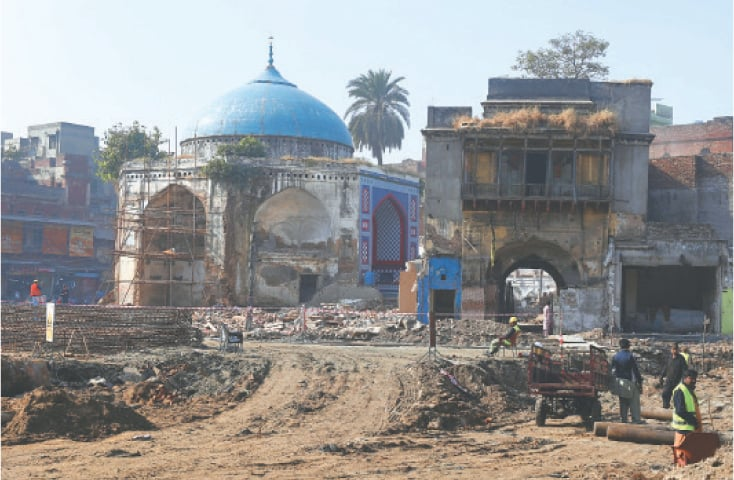
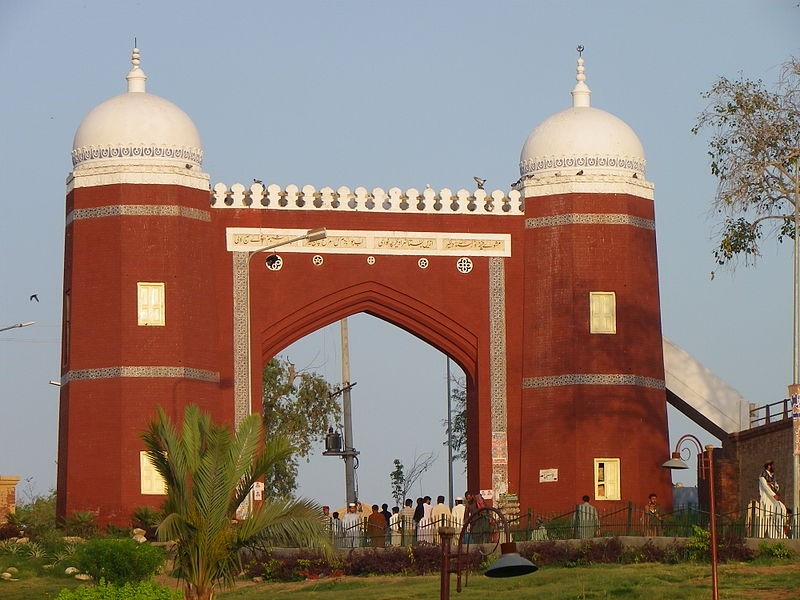
Nestled behind the magnificent Wazir Khan Mosque in the heart of Lahore’s Walled City, Kocha Hussain Shah stands as a testament to centuries of craftsmanship, community, and cultural continuity. This historic neighbourhood, recently brought back to life through the dedicated efforts of the Walled City of Lahore Authority (WCLA) with contributions from CultuRise, represents more than just restored buildings; it embodies the soul of a city that refuses to let its heritage fade into obscurity.
A Neighbourhood Steeped in History
The story of Kocha Hussain Shah is woven into the very fabric of Lahore’s Mughal past. The neighbourhood derives its name from Hussain Shah, a remarkable healer renowned throughout the Walled City for his legendary ability to treat eye ailments. According to historical accounts, he possessed a special surma (kohl) that could allegedly restore vision, even to those who had lost their sight entirely. Beyond his healing prowess, Hussain Shah also served as the warden of the Rezakar team before the establishment of Pakistan, adding another layer to his community service legacy.
Historically, Kocha Hussain Shah was known as a settlement for skilled artisans who contributed to the construction of the nearby Wazir Khan Mosque, one of the finest examples of Mughal architecture built during Emperor Shah Jahan’s reign between 1634 and 1641. These master craftsmen, including bookbinders, calligraphers, and mosque caretakers, made this neighbourhood their home, creating a vibrant community that sustained the cultural and spiritual life surrounding the mosque.
The neighbourhood’s spiritual significance is further enhanced by its proximity to the shrine of Hazrat Imam Gamo, located south of the entrance to Wazir Khan Mosque. This sacred site has drawn pilgrims and devotees for generations, making Kocha Hussain Shah not just a residential area but a spiritually charged space within the Walled City.
The Challenge: Centuries of Neglect
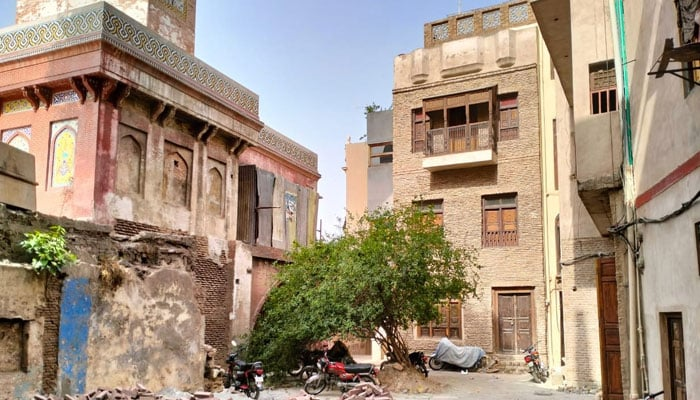
Like many historic neighbourhoods in Lahore’s Walled City, Kocha Hussain Shah had fallen victim to decades of neglect and urban decay. The 31 buildings that line this 400-meter stretch of narrow streets, 13 of which are nearly two centuries old, were crumbling under the weight of time. Deteriorating facades, exposed electrical wiring, inadequate sanitation systems, and poor drainage had transformed this once-thriving neighbourhood into a shadow of its former glory. The architectural heritage that had survived the tumultuous events of partition, the demolition of city walls by the British after the 1857 uprising, and the pressures of modern urbanization was in desperate need of intervention. Without decisive action, this precious link to Lahore’s Mughal past risked being lost forever.
WCLA’s Vision: Preservation Through Partnership
Recognizing the urgent need to preserve this historic neighbourhood, the Walled City of Lahore Authority launched an ambitious restoration project in 2021 under its Annual Development Programme (ADP). With a budget of Rs. 90 million funded by the Punjab government, the project aimed not merely to restore buildings but to revive an entire community while preserving its authentic character and historical significance.
Under the leadership of the former WCLA Director General Kamran Lashari, the authority adopted a holistic approach that went far beyond surface-level cosmetics. “This is one of the most attractive and interesting koochas of the Walled City of Lahore,” Lashari noted. “We are very diligently working on restoring this Kocha and aim to revive it to its original glory.”
The WCLA’s methodology reflected international best practices in heritage conservation. Before any restoration work began, the team conducted comprehensive architectural documentation and employed cutting-edge 3D scanning technology to assess the exact condition of every building. This scientific approach ensured that interventions would be both authentic and structurally sound, respecting the original Mughal and colonial-era architectural elements while addressing modern safety and livability standards.
The Restoration: A Multi-Faceted Approach
The rehabilitation of Kocha Hussain Shah encompassed several critical dimensions:
Structural and Facade Restoration: All 31 buildings received careful attention to their structural integrity and exterior appearance. Conservation experts worked to stabilize weakened foundations, repair crumbling walls, and restore original architectural features such as ornate wooden balconies, decorative brickwork, and traditional lime plaster finishes. Special care was taken with the 13 buildings of highest historical significance, ensuring that their nearly 200-year-old character remained intact.
Infrastructure Modernization: The project tackled the neighbourhood’s infrastructure deficits comprehensively. Overhead electrical wiring that had created a dangerous tangle above the streets was relocated underground, dramatically improving both safety and aesthetics. The sanitation and sewerage systems were completely overhauled, with open drains covered to improve hygiene and prevent flooding during monsoons. These interventions brought 21st-century functionality to a centuries-old neighbourhood without compromising its historic character.
Street Enhancement: The 400-meter street received complete resurfacing with materials sympathetic to the historic context. New street lighting was installed to illuminate the neighbourhood’s architectural beauty while ensuring safety for residents and visitors alike. The lighting design was carefully calibrated to enhance rather than overwhelm the traditional streetscape.
Wayfinding and Tourism Infrastructure: Recognizing Kocha Hussain Shah’s potential as a destination on Lahore’s heritage trail, informative signboards were installed to guide tourists and provide historical context. Seating areas were thoughtfully integrated into the urban fabric, offering respite for visitors while maintaining the neighbourhood’s residential character.
CultuRise’s Contribution: Adaptive Reuse Through Thoughtful Design
As a company deeply committed to promoting and preserving Pakistan’s tangible and intangible heritage, CultuRise played a vital role in shaping the project’s approach to adaptive reuse. Our team provided crucial recommendations focused on two key areas that would transform Kocha Hussain Shah from a restored relic into a living, breathing community space.
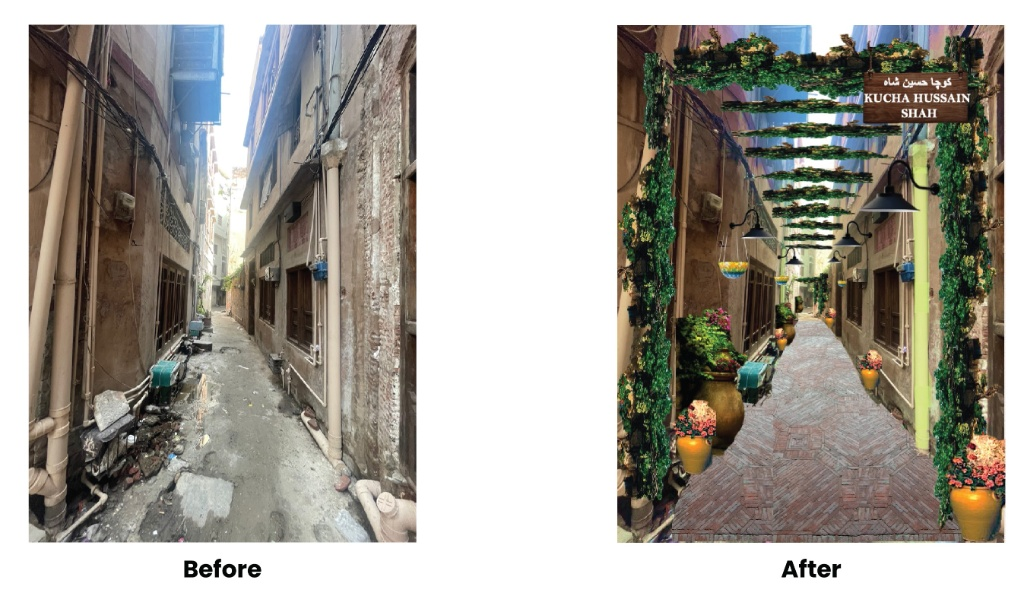
Strategic Plantation and Green Spaces: Understanding that heritage preservation must balance conservation with contemporary quality of life needs, CultuRise advocated for the integration of carefully planned green spaces throughout the neighbourhood. In a dense urban environment where open space is precious, we recommended the strategic placement of potted plants, climbers along walls, and small courtyard gardens that would not compromise the historic structures but would enhance the microclimate, improve air quality, and provide visual relief.
Space Curation for Community and Tourism: CultuRise’s adaptive reuse recommendations focused on creating multi-functional spaces that could serve both the resident community and cultural tourists. We suggested the curation of specific areas within the neighbourhood that could host cultural activities, craft demonstrations by local artisans, and small-scale community gatherings without disrupting residential life.
Community at the Heart of Conservation
One of the most remarkable aspects of the Kocha Hussain Shah restoration was WCLA’s commitment to participatory conservation. From the project’s inception, the authority engaged in extensive consultations with local residents, sharing design proposals and incorporating community feedback. This approach ensured that conservation efforts respected the needs and aspirations of the people who actually live in these historic buildings.
Project head Mubashir Hassan emphasized this collaborative approach: “The community of the area was also taken on board and several discussions and design sharing of the interventions were done with them as WCLA works with a participatory approach and involves the community in all the works.”
This methodology stands in stark contrast to top-down conservation projects that often displace existing communities in favor of tourism development. By keeping residents at the center of decision-making, WCLA and its partners ensured that Kocha Hussain Shah would retain its authentic character as a lived-in neighbourhood.
A New Chapter Begins
On April 5, 2025, Kocha Hussain Shah was officially inaugurated and opened to the public, marking the successful completion of the restoration project. The transformation was nothing short of remarkable. Buildings that had been on the verge of collapse now stood proud with restored facades showcasing traditional brickwork and wooden details. Streets that had been cluttered and unsanitary were now clean, well-lit, and inviting. Underground utilities replaced the chaotic tangle of overhead wires, while improved drainage systems prepared the neighbourhood for monsoon seasons.
The neighbourhood’s connection to the tourist trail linking Delhi Gate with Wazir Khan Mosque and other heritage sites positions it as an emerging hotspot for cultural tourism. Visitors can now explore this authentic slice of Mughal-era Lahore, experiencing not just architecture but the living culture of a traditional neighbourhood.
For residents, the improvements have brought tangible benefits: better sanitation, reliable infrastructure, enhanced property values, and renewed pride in their historic homes. The project demonstrates that heritage conservation and improved quality of life are not competing goals but complementary objectives.
Lessons for Heritage Conservation in Pakistan
The successful restoration of Kocha Hussain Shah offers valuable lessons for heritage conservation efforts across Pakistan:
Scientific Methodology Matters: The use of 3D scanning, thorough architectural documentation, and consultation with conservation experts ensured that interventions were appropriate and authentic. This scientific approach should become standard practice for all heritage projects.
Community Participation is Essential: Sustainable conservation cannot happen without the buy-in of local communities. Participatory approaches that respect residents’ needs lead to better outcomes and ensure long-term maintenance.
Adaptive Reuse Preserves Heritage: By integrating thoughtful contemporary uses such as cultural programming and heritage tourism alongside residential functions, historic neighbourhoods remain relevant and economically viable.
Infrastructure and Heritage Coexist: The Kocha Hussain Shah project proves that modern amenities and historic character are not mutually exclusive. Careful planning can bring contemporary comfort to ancient buildings without compromising their authenticity.
Multi-Stakeholder Collaboration Works: The partnership between WCLA, the Punjab government, consultants like NESPAK, and organizations like CultuRise demonstrates that complex conservation projects benefit from diverse expertise and perspectives.
Looking Forward: A Model for the Walled City
Kocha Hussain Shah represents just one chapter in the ongoing story of the Walled City of Lahore’s revival. WCLA has undertaken numerous conservation projects throughout the historic core, from the restoration of the Shahi Hammam and Delhi Gate to the rehabilitation of Gali Surjan Singh, which received UNESCO recognition. Each project builds on lessons learned from previous efforts, creating a growing body of expertise in South Asian heritage conservation.
The restoration of Kocha Hussain Shah is particularly significant because it demonstrates how entire neighbourhoods, not just individual monuments, can be conserved holistically. This neighbourhood-scale approach preserves not just buildings but the urban fabric, social networks, and cultural practices that give historic areas their distinctive character.
For CultuRise, this project exemplifies our vision of heritage conservation that serves both preservation and contemporary community needs. Our recommendations for plantation and space curation were grounded in the belief that Pakistan’s tangible heritage its buildings, streets, and monuments must be accompanied by the preservation of intangible heritage: the crafts, social practices, and community traditions that give these spaces meaning.
As Lahore’s Walled City continues its transformation from neglected historic core to vibrant cultural destination, projects like Kocha Hussain Shah show the way forward. They prove that with political will, adequate funding, scientific methodology, community participation, and thoughtful design, Pakistan’s extraordinary heritage can be preserved for future generations while improving the lives of present residents.