In the heart of Lahore, where the old city’s rhythm continues to pulse with stories of the past, stands Javed Manzil, a testament to one man’s extraordinary vision that reshaped the destiny of millions. This elegant two-story structure, now known as the Allama Iqbal Museum, represents far more than bricks and mortar. It embodies the final chapter of a philosopher-poet whose words awakened a nation and whose thoughts continue to resonate across generations.
A Location Steeped in History
Nestled on Allama Iqbal Road, formerly known as Mayo Road, in the bustling neighborhood of Garhi Shahu, Javed Manzil occupies a strategic position in Lahore’s cultural landscape. Its proximity to the Lahore Railway Station was no accident. For a man as politically active as Allama Muhammad Iqbal, who traveled extensively across the length and breadth of the Indian subcontinent during the tumultuous years of the independence movement, this location proved ideal. The railway station served as his gateway to countless political meetings, philosophical discussions, and poetic gatherings that would eventually culminate in the creation of Pakistan. The seven kanal estate, spanning approximately 31,500 square feet, was purchased by Iqbal in 1934 for Rs. 25,025. Of all the residences where the poet-philosopher lived in Lahore, Javed Manzil holds the unique distinction of being the only property that truly belonged to him, making it all the more significant as the keeper of his final memories.
The Poet-Philosopher Who Changed History
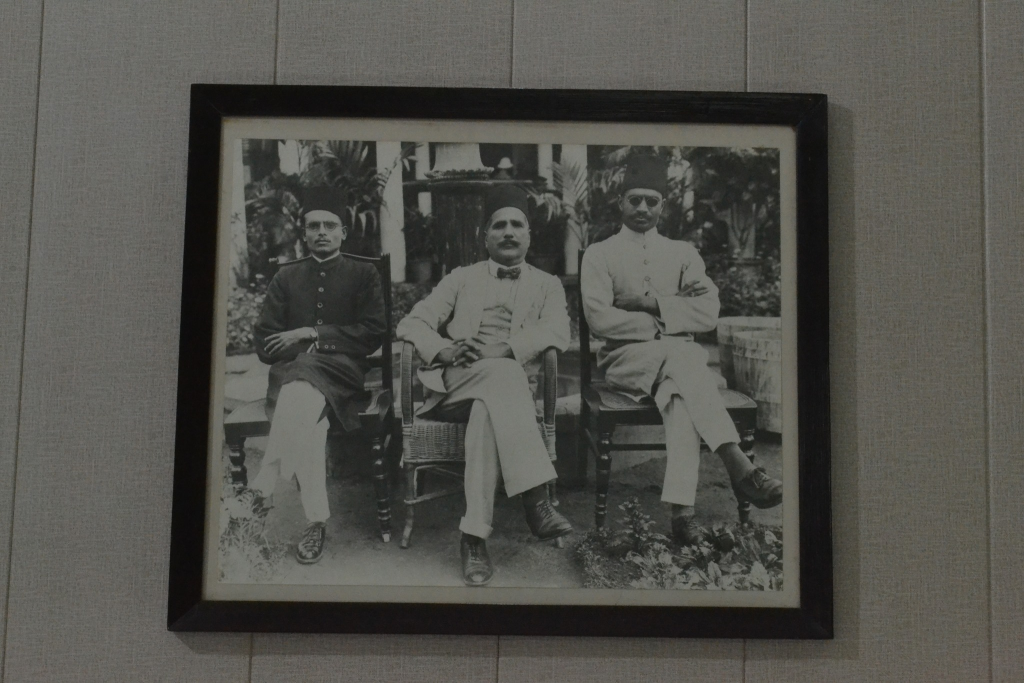
Allama Muhammad Iqbal, born on November 9, 1877, in Sialkot, moved into Javed Manzil in 1935, at the age of 58. These walls witnessed the final three years of his remarkable life, years filled with literary creation, political contemplation, and physical struggle. It was here, in the quiet dignity of his bedroom, that Iqbal breathed his last on April 21, 1938, leaving behind a legacy that would shape the ideological foundations of Pakistan.
Iqbal’s presence permeates every corner of this house. The poet who penned “Bang-e-Dara,” “Baal-e-Jibreel,” “Zarb-e-Kaleem,” and “Javed Nama” found inspiration within these walls. His revolutionary poetry served as a clarion call to Muslims across the subcontinent, reminding them of their glorious past while urging them toward self-determination. Working closely with Quaid-e-Azam Muhammad Ali Jinnah, Iqbal’s intellectual framework provided the philosophical underpinning for the Pakistan movement.
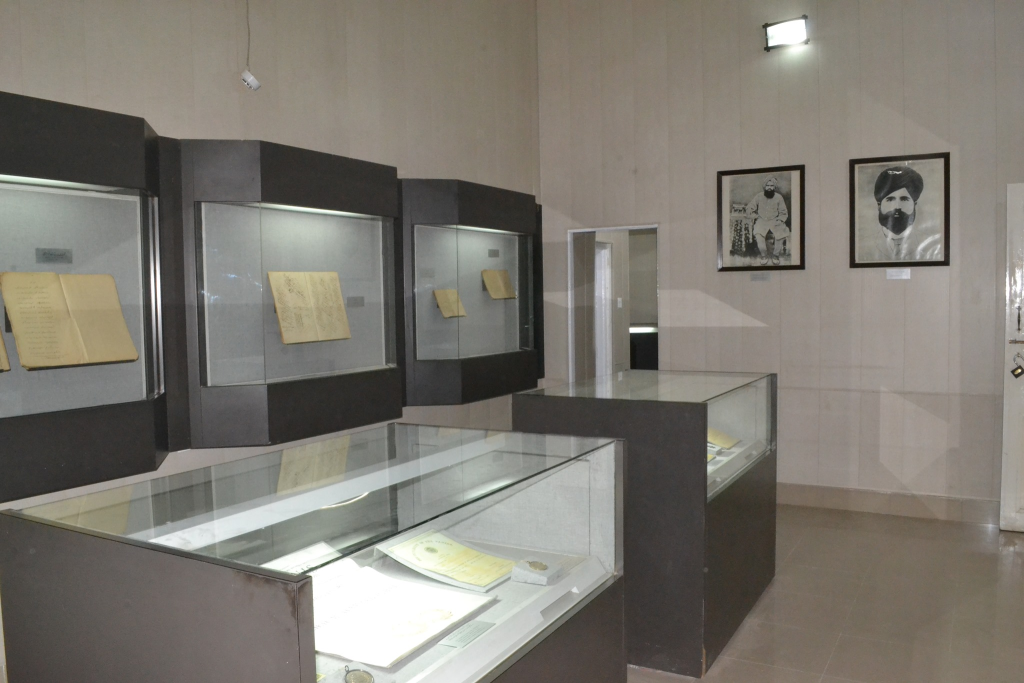
The house also welcomed distinguished guests and bore witness to important relationships. Photographs displayed in the museum reveal Iqbal’s connections with Sir Ross Masood, grandson of Sir Syed Ahmed Khan, and King Mohammed Nadir Shah of Afghanistan. These associations reflect the breadth of Iqbal’s influence and his deep engagement with the Muslim world beyond the Indian subcontinent.
A Cultural Repository: Preserving the Poet’s Legacy
What makes Javed Manzil truly exceptional as a cultural repository is its intimate preservation of Iqbal’s personal life. Unlike grand monuments that inspire through scale, this museum moves visitors through authenticity. The four rooms that Iqbal personally used have been preserved in their original form, offering an unfiltered glimpse into the daily existence of one of South Asia’s greatest intellectuals.
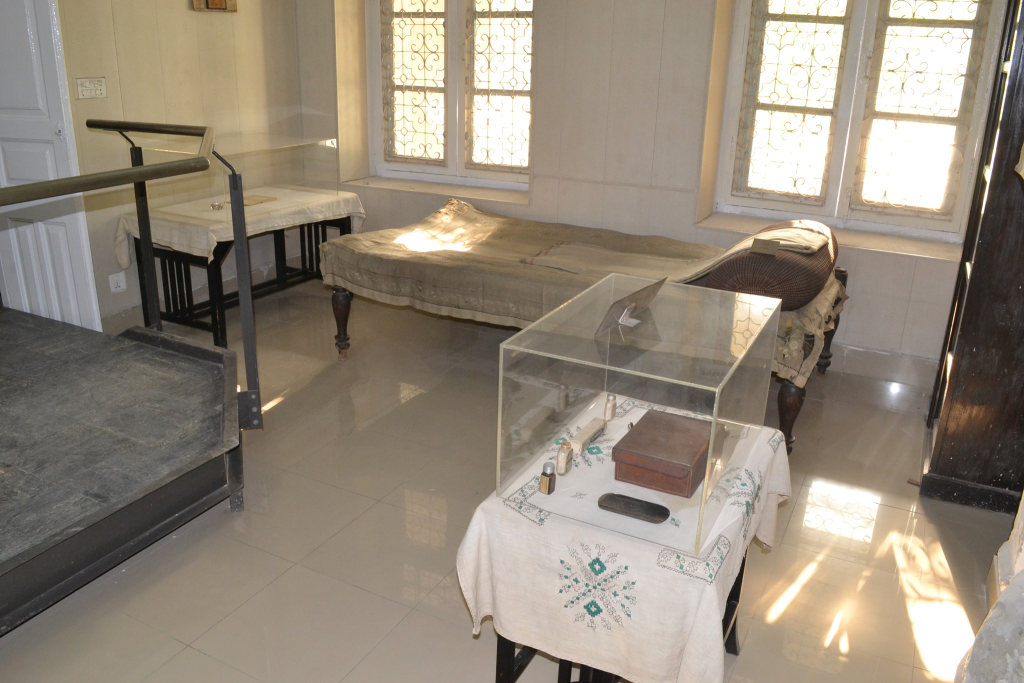
The bedroom remains exactly as Iqbal left it, complete with his bed, the mantelpiece adorned with photographs of cherished friends and admirers, a chair positioned by the wall opposite the bathroom, a spittoon, a dressing table, a wall clock frozen in time, and even the medicines the poet used in his final days. This preservation allows visitors to step into Iqbal’s world, to imagine him sitting in that very chair, contemplating verses that would electrify millions.
The drawing room presents a fascinating window into Iqbal’s intellectual and spiritual influences. A photograph of the Cordova Mosque in Spain occupies pride of place on the mantelpiece, alongside a simple six-seat sofa. This image represents more than aesthetic appreciation. Iqbal had the rare honor of praying at the Cordova Mosque during his visit to Spain, and for him, it symbolized the zenith of Islamic civilization in Europe. The mosque’s architectural grandeur, reflecting the finesse of Islamic art and culture, resonated deeply with Iqbal’s vision of a renaissance for Muslim societies.
Another wall displays a photograph of Iqbal with teachers from Al-Azhar University in Egypt, with his son Javed Iqbal visible in the memorable image. This photograph speaks to Iqbal’s continuous engagement with centers of Islamic learning and his commitment to intellectual exchange across the Muslim world.
The dining room maintains its period character with a dining table, six chairs, two cabinets, and a dressing table. Beyond these living spaces, two additional rooms house an extraordinary collection of literary treasures. Glass casements display original manuscripts of Iqbal’s poetic and prose works, first editions of his seminal publications, personal diaries, invitation letters, and correspondence that reveal the workings of his brilliant mind.
Among the museum’s most precious holdings is the original manuscript of Iqbal’s travelogue, “Musafir yani Siahat Chandroza Afghanistan” (Traveler: A Few Days Journey to Afghanistan). Professor Mazhar Moeen, former Principal of Oriental College, Punjab University, explained Iqbal’s deep affection for Afghanistan, suggesting that the poet admired it as an independent Muslim state in Asia, a quality that resonated with his political philosophy.
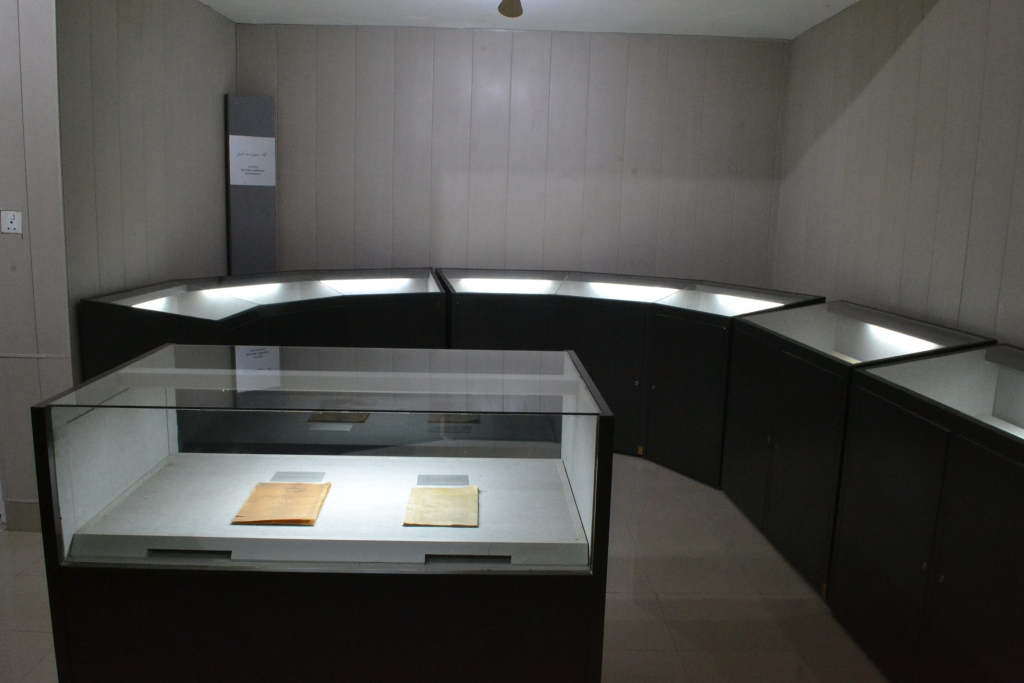
The museum also displays Iqbal’s educational certificates and his PhD degree from a German university, serving as inspiration for visitors to pursue excellence in scholarship. Personal items including his spectacles, wristwatch, ash-tray, ring, gold cuff-links, collars, and bow-ties offer intimate insights into his daily life and refined personal style.
Three plaster-of-Paris models on display represent significant places in Iqbal’s life journey: Government College Lahore (his alma mater), Scotch Mission High School in Sialkot (where he received his early education), and Iqbal Manzil in Sialkot (his birthplace). These models help visitors trace the geographical and educational trajectory that shaped the philosopher-poet.
The entrance gallery features life-size photographs of Iqbal’s parents, Sheikh Noor Muhammad and Imam Bibi, reminding visitors of the family foundation that nurtured this extraordinary talent. Another room exhibits photographs of Iqbal’s three wives: Karam Bibi, Mukhtar Begum, and Sardar Begum, providing context to his personal life. Sardar Begum, his youngest wife, was the mother of Justice (Retd.) Javed Iqbal and daughter Munira Bano.
When Justice Javed Iqbal donated his father’s residence to the nation, he also contributed six hundred objects belonging to the poet, enriching the museum’s collection immeasurably. The museum now features nine galleries, a library, and covers the historical period from 1877 to 1938, offering comprehensive documentation of Iqbal’s life and achievements.
The Journey from Private Residence to National Monument
The transformation of Javed Manzil from a private residence to a public monument began in 1961 when the Government of Pakistan announced plans to convert the site into a museum. This decision reflected the nation’s recognition of Iqbal’s pivotal role in its creation. In 1977, during centenary celebrations marking Iqbal’s birth, the government formally acquired the property from Justice Javed Iqbal for Rs. 3.5 million and declared it a national monument. The museum was renovated and officially inaugurated in December 1984 by Pakistani President Muhammad Zia-ul-Haq. This inauguration marked the completion of a dream to create a permanent repository for Iqbal’s legacy, ensuring that future generations could connect with the life and work of their poet-philosopher.
Current Condition and Conservation Challenges
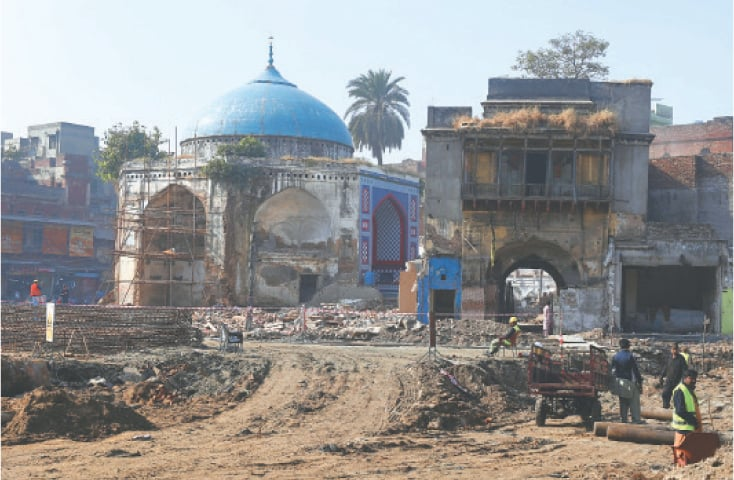
For decades, Javed Manzil has faced the challenges that afflict many historical sites in Pakistan: inadequate maintenance, limited resources, environmental degradation, and the natural deterioration that comes with time. Heritage conservationists and Iqbal devotees have long expressed concern about the museum’s condition, noting issues with structural integrity, outdated displays, and the need for modern conservation techniques to protect irreplaceable manuscripts and artifacts. Reports of neglect and loss have periodically surfaced, with concerned citizens and organizations advocating for urgent intervention. The building’s 90-year-old structure requires careful restoration work that respects its historical character while ensuring its stability for future generations. The museum’s display systems, largely unchanged since the 1980s, need modernization to meet contemporary standards of curation and visitor engagement.
A New Dawn: Recent Archaeological Department Initiatives
The tide has finally turned for Javed Manzil, as the Punjab government has launched one of the most ambitious heritage restoration projects in recent years. In October 2025, the Tourism Department and the Directorate General of Archaeology initiated a comprehensive rehabilitation program for the historic site, signaling a renewed commitment to preserving Pakistan’s cultural heritage. The restoration project represents a remarkable international collaboration. The Punjab Tourism Department signed a memorandum of understanding with the Turkish Cooperation and Coordination Agency (TİKA) during Turkish National Day celebrations in Islamabad in October 2025. According to Dawn, TİKA has committed Rs. 100 million (later reported as Rs. 200 million in broader heritage funding announcements) specifically for Javed Manzil’s restoration.
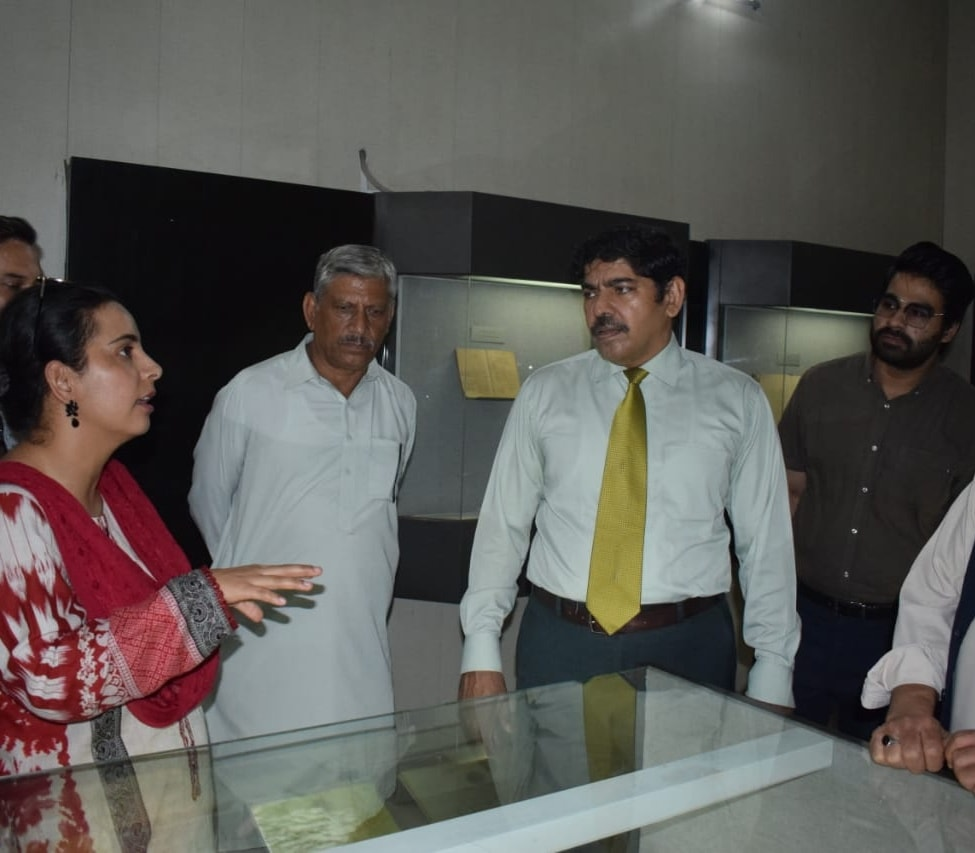
Tourism Secretary Dr. Ehsan Bhutta held detailed discussions with TİKA Country Coordinator Ms. Saleha Tuna and her technical team, exploring the project’s technical and legal aspects. The meeting established protocols for coordination, with previous groundwork, technical designs, display concepts, and documentation being shared with the Turkish team to ensure effective implementation. The restoration timeline is ambitious yet meaningful. The project aims for completion before November 2026, deliberately aligned with the 150th birth anniversary celebrations of Allama Muhammad Iqbal. This target date adds profound significance to the restoration effort, ensuring that the museum will stand renewed as the nation commemorates a century and a half since the birth of its spiritual founder.
The project forms part of a larger Rs. 1.5 billion heritage revival initiative launched by the Punjab government. As reported by The News, this comprehensive program involves the Tourism Department and the Directorate General of Archaeology in one of the most extensive heritage programs in recent years. The initiative encompasses museum revitalization, archaeological expansion, and the creation of new cultural destinations across Punjab. Dr. Ehsan Bhutta has emphasized incorporating digital storytelling at Javed Manzil, presenting history and heritage through modern, engaging methods. This approach recognizes that younger generations require interactive, technology-enabled experiences to connect with historical narratives. The restoration will likely include upgraded display systems, improved climate control for artifact preservation, structural reinforcement, enhanced visitor facilities, and digital interpretation tools that bring Iqbal’s world to life.
The Punjab Archaeology Department has already begun preparatory work at the site. Directorate General of Archaeology officials, including Director General Zaheer Abbas Malik, have conducted multiple site visits to assess current conditions and coordinate restoration plans. Director Archaeology Masood Ahmed Malik has affirmed the department’s commitment, stating that they are endeavoring to preserve relics for posterity while making the museum more convenient for visitors.
The international collaboration with Turkey holds special significance. Turkey’s own success in heritage conservation, combined with the historical and cultural connections between the two Muslim nations, makes TİKA an ideal partner. The Turkish agency brings technical expertise, experience with large-scale restoration projects, and a shared understanding of the cultural importance of preserving Islamic heritage sites. Social media posts from Punjab’s archaeology department throughout 2025 have shown restoration activities in progress, with images of conservators working on site and officials inspecting various aspects of the building. Posts emphasize that they are “restoring not just walls, but the spirit of Iqbal’s vision,” capturing the deeper purpose behind the technical work.
Looking Forward: A Museum for the Future
The restoration of Javed Manzil arrives at a crucial moment. Pakistan’s young population, often disconnected from historical narratives, needs accessible entry points to understand their nation’s foundations. Digital storytelling, interactive displays, and engaging interpretation can bridge the gap between Iqbal’s 20th-century world and 21st-century sensibilities.
The planned improvements will likely transform the visitor experience. Imagine walking through Iqbal’s rooms while audio recordings of his poetry play softly in the background. Picture touchscreen displays that allow visitors to browse digitized manuscripts, reading his handwritten verses while English and Urdu translations appear alongside. Envision augmented reality applications that overlay historical scenes onto the physical spaces, showing Iqbal at work, in discussion with visitors, or in quiet contemplation.
The restoration also presents an opportunity to expand educational programming. School groups could participate in workshops where they learn traditional calligraphy while copying Iqbal’s verses. University students could attend seminars exploring Iqbal’s philosophy in contemporary contexts. International scholars could access research facilities that support serious academic work on Iqbal’s life and legacy. Furthermore, the museum could develop stronger connections with other Iqbal-related sites across Pakistan, creating a comprehensive “Iqbal Trail” for cultural tourists. This trail could link his birthplace in Sialkot, his alma mater Government College Lahore, his final resting place at the Badshahi Mosque, and Javed Manzil, offering a complete narrative of his life journey.
As we approach Iqbal’s 150th birth anniversary in November 2026, the renewed Javed Manzil will stand as a fitting tribute.